
Same-Day When We Can · Se Habla Español
Dead Rodent Removal McAllen, TX
There is a smell in the house and you cannot find it. It is worse in one room, worse in the afternoon, and it is getting stronger. Something died in a wall or in the attic. We find it, cut the smallest opening we can, take it out, and treat what it left behind.
Why It Is So Bad Here
A Dead Rat in a McAllen Attic Is Not the Same as a Dead Rat in Ohio
People move here from up north and cannot understand why the smell is so overwhelming. It is the heat. A McAllen attic in July or August sits well over 100 degrees under that roof deck — hotter than the air outside, all afternoon, every afternoon. Decomposition in that kind of heat is fast and it is aggressive.
In a cool climate a dead mouse in a wall might be a faint, unpleasant week. In the Rio Grande Valley the same mouse can turn a room unusable in two days, and a rat can make the whole house hard to live in. The smell peaks somewhere around the first week or two and then fades slowly, but it can hang around for two to six weeks depending on the size of the animal, where it is, and how much airflow that cavity gets.
You will also get flies. Blow flies find a carcass fast, and a sudden cluster of fat, sluggish flies at one window or one ceiling corner is often the best clue we have about which cavity to open.
How You Got Here
Nine Times Out of Ten, Somebody Put Poison in the Attic
We are not going to lecture you. But it is worth knowing how most of these calls start, because it explains why this happened and how to make sure it does not happen again.
Somebody hears rats in the ceiling. They buy bait blocks, or a company tosses bait into the attic and drives away. The bait works. The rat eats it, gets thirsty and disoriented, goes looking for water, and crawls into the deepest, quietest place it can find — inside a wall cavity, above a bathroom ceiling, behind the AC air handler, down in the soffit. Then it dies there, in the heat, on the other side of your drywall.
That is the whole problem with baiting a house in this climate. Poison does not make rodents go outside to die. That is a myth, and it is the single most expensive myth in the pest business. A trap keeps the animal where you can find it. Bait sends it somewhere you cannot.
The other common causes: a rodent got sealed in when someone closed up the entry points without trapping first, or an animal simply died of age or injury in a wall it had been living in for months. Same job either way.
The Job
How We Actually Find It and Get It Out
01 Narrowing It Down
We work the smell like a search grid: which room, which wall, high or low, worse in the heat of the day. Then we look for the tells — fly activity, a stain bleeding through drywall or a ceiling, and the runways and droppings that show where the animal was living before it died.
02 Attic First, Drywall Last
Most of the time the animal is reachable from the attic and nobody has to cut anything. That is always the first thing we try. Opening a wall is the last resort, not the opening move.
03 The Smallest Cut Possible
If we do have to open a wall or ceiling, we cut a clean, patchable access hole in the least visible spot that reaches the carcass. We will show you exactly where before we touch it.
04 Removal, Then the Part People Forget
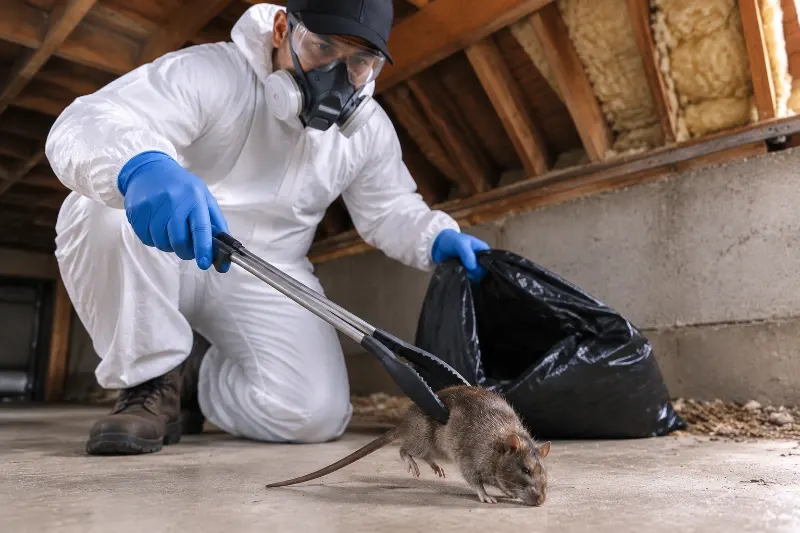
The carcass comes out and gets bagged. Then we treat the site: remove contaminated insulation and nesting material, clean and disinfect the cavity, and treat for the fly larvae, because otherwise you get a second wave of flies a week later and you will think we missed something.
05 Then We Ask the Obvious Question
How did it get in? Because if that hole is still open, you are going to be calling somebody about a smell again. We find the entry points and seal them. That is rodent exclusion, and it is the only thing that makes this a one-time job.
What It Costs
Dead Rodent Removal Prices in McAllen
You will hear wildly different numbers around the Valley for this, from twenty dollars to a few hundred, and the spread confuses people. Here is what the difference actually is.
| Situation | Typical McAllen Range |
|---|---|
| Animal visible and reachable in the attic | $ |
| Located in a wall or ceiling, drywall access needed | $$ |
| Add: contaminated insulation removal & sanitizing | $$ |
| Add: sealing the entry points so it does not recur | $$ |
| Inspection | No Cost to You |
And to answer the question everyone asks next: no, your insurance will not pay for this. Texas homeowners policies exclude rodents as a maintenance issue. We explain exactly where that line sits on our insurance and rodent damage page.
Can You Just Wait It Out?
Honest Answer: Sometimes, But Rarely Worth It
A mouse in an exterior wall, in a room you barely use, in January? You could probably ride that out in a couple of weeks with the windows open and nothing bad would come of it. We are not going to pretend otherwise.
A rat above a bedroom ceiling in August is a different animal, literally. Bigger body, far more heat, far more fluid, and it is directly above where you sleep. That one can stain a ceiling, soak insulation, breed flies, and make a room genuinely unusable for a month. And an air freshener does nothing but make the house smell like a dead rat wearing perfume.
- Do not wait if the smell is over a living area or a bedroom, if you are seeing flies indoors, if there is a stain forming on a ceiling, or if anyone in the house has asthma or a breathing condition.
- Definitely do not wait if you run a restaurant, a clinic, a daycare or any food handling business. That is not a comfort problem, it is a compliance problem.
And remember what the smell is really telling you: that animal got in somehow, and it was probably not alone. Where there was one, there is usually a family. That is why we always look at how it got in.
Questions
Dead Rodent Removal: FAQs
How much does dead rodent removal cost in McAllen?
If the animal is reachable in the attic, it costs less. If it is inside a wall or ceiling and drywall has to be opened, expect a higher cost. Removing contaminated insulation and sanitizing the area adds a further cost, depending on how much material is affected. Inspections come at no cost to you.
How long does a dead rat smell last in a wall?
In McAllen heat, usually two to six weeks. The smell tends to peak in the first week or two and then fades slowly. A mouse clears faster than a rat, and a carcass in a hot attic or a poorly ventilated cavity lasts longer and smells stronger than one in a cool, ventilated space.
Why does it smell so much worse here than up north?
Heat. A McAllen attic routinely sits well above 100 degrees under the roof deck in summer, which speeds decomposition dramatically. The same dead mouse that would be a mild nuisance in a cool climate can make a room unusable within a couple of days here.
Will the smell eventually go away on its own?
Yes, eventually. But a rat above a bedroom ceiling in August can stain the ceiling, soak the insulation, and breed flies for weeks before it does. Waiting it out is only reasonable for a small animal, in an exterior wall, in a room you rarely use, in cooler weather.
Why are there suddenly flies in one room of my house?
A cluster of large, slow flies at one window or ceiling corner is one of the classic signs of a dead animal in that cavity. Blow flies locate a carcass quickly and breed on it. Removing the carcass without treating the site is why some people get a second wave of flies about a week later.
Did the poison cause this?
Most likely, yes. Poisoned rodents do not go outside to die, which is a widespread myth. Bait makes them thirsty and disoriented, and they crawl deep into wall cavities, soffits and ceiling voids looking for water and quiet, and die there. This is the main reason we trap rather than bait inside McAllen homes.
Can you get the rat out without cutting my wall?
Very often, yes. Most carcasses are reachable from the attic, and we always try that first. If a wall or ceiling does have to be opened, we cut the smallest clean access hole possible in the least visible spot, and we show you where before we cut anything.
Does homeowners insurance cover dead animal removal?
Generally no. Texas homeowners policies exclude rodents and vermin as a preventable maintenance issue, so both the removal and the cleanup are usually out of pocket. The Texas Department of Insurance lists rodent damage among the things a home policy will not pay to repair.
Go Deeper
More on Dead Rodent Removal
- What’s Included in Dead Rodent Removal — a step-by-step look at the full process.
- Signs of a Dead Rodent in Your Walls or Attic — what to look for and the usual timeline.
- Cost of Dead Rodent Removal in McAllen — what drives pricing and how to compare quotes.
Schedule a McAllen Rodent Inspection
We will tell you what you are dealing with, how they are getting in, and exactly what it will cost to fix. No pressure, no guessing.
Rio Rodent Solutions · McAllen, TX · (956) 660-9706 · Licensed & Insured, TDA License [TPCL#] · Se Habla Español